mer 12 dec 2007

Chanel

Gabrielle "Coco" Chanel, Chanel N°5, rue Cambon (Paris), the Ritz Hotel (Paris), Karl Lagerfeld, the little black dress, elegance, smoked lens glasses, fans, luxury, diets, icons... Chanel, thanks to its rich history of inspirations and its present hip-yet-classic visionary, is a living legend.

Chanel

It would be nice to believe that the magic of Chanel is due solely to the talents of Coco and Karl, that it was simply destiny that decided that a young stylist ahead of her time would be succeeded by an eclectic dandy and visionary, creating an original and auspicious alchemy that would render eternal the house of Chanel. And yet, as talented as the protagonists were and still are, nothing would have happened, or at least, persevered without the intervention of the Wertheimer family who, since 1924 played the role of spin-doctor, oiling the gears of Chanel.

In 1910, Coco Chanel moved into rue Cambon and began to make her name among the elegant Parisians. In 1913, she opened a second boutique in Deauville, which would propel her into the good graces of the society. Her sporty tweed suits and her simple, perfect cuts allowed women to live in freedom from their corsets, quickly bringing her fame and all its advantages.

But what would protect Mademoiselle Chanel from the fluctuations of changing fashions and economic conditions would not be one of her creations, but a chance encounter. It was in 1923 at the horse races where Gabrielle Chanel met Pierre and Paul, the Wertheimer brothers. They came from a family in the Lower-Rhine region (Germany) who had made their fortune in the 19th century, as talented in business as they were passionate about horses.

They had already invested in promising companies like Les Galeries Lafayette and SECM (an aeronautic company); this is why when their paths crossed that of Coco Chanel's, about whom all of Paris was talking and who had just launched the visionary Chanel N°5, that they did not hesitate to propose their assistance.

Coco Chanel perfume

Chanel saw in their offer an unhoped-for opportunity to expand, and on April 4, 1924, they came together to give birth to Parfums Chanel. This new company continued to employ Ernest Beaux, Chanel's nose, who created over the years mythical perfumes, such as le Cuir de Russie. The Wertheimers soon held 90% of the company, a fact that Chanel would later find very irritating.

But the time for conflict had not yet come. Parfums Chanel was a veritable success and the house of Chanel was in shining form. All women wanted to wear Chanel. In 1926, Coco Chanel could have been named woman of the year so much were her contributions to fashion important, symbolic and emblematic.

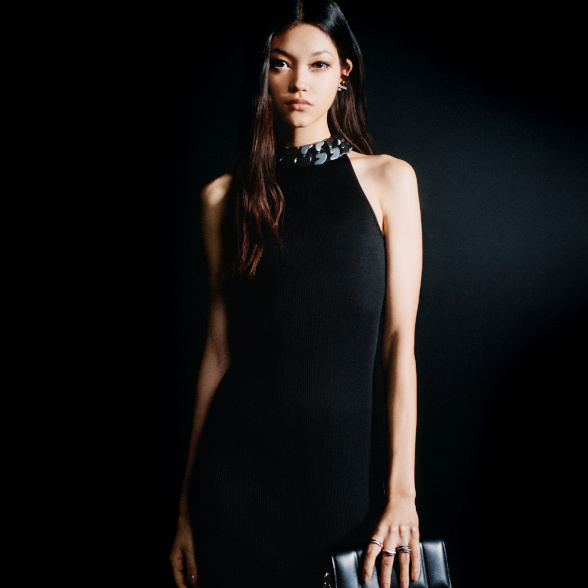
The little black dress, with its chic yet simple elegance, was born. This little dress code revolution may have been accepted by France, but it took America by storm. The fashion editors swore by it and it only; for them it was the quintessence of modernity.

For her collections, Coco Chanel took inspiration from her travels, from the men who were part of her life and from that freedom that she demanded. She created clothes for an emancipated woman and borrowed from men's wardrobe a good number of elements, such as tweed, military braids, pants, and large buttons.

Coco Chanel

In 1926, Chanel had found her style and imparted to her house the principles that exist to this today. As was the case with her little black dress, her success was not limited to France. In 1930, Chanel dressed the most famous stars, including Greta Garbo and Marlène Dietrich

The Dame of rue Cambon, who had celebrated her 50th birthday, found herself at the summit of her glory. She imposed costume jewelry, created a Chanel "total look," updated jersey and tweed, widened her creations to include cosmetics and revolutionized the wardrobe of the era. During the 1930s, she was at the head of a veritable empire selling 30,000 pieces per year, owned a large part of rue Cambon, and employed more than 4000 people. Soon, however, history would work against this unparalleled glory.

In 1939, WWII broke out. Chanel closed her house and laid low in her rue Cambon apartments, then fled to Switzerland in 1944. This period reveals a darker image of Gabrielle Chanel, who apparently was not so inclined to honorable sentiments and patriotism when it came to money.

Parfums Chanel had, since its creation in 1924, known only growing success. However, given the distribution of shares, Chanel herself received nothing more than crumbs of this amazing commercial venture, and began to deeply resent the Wertheimer bothers, who had seen the potential in the venture from the beginning and who had since harvested the fruits of their vision. Chanel found it intolerable that this money would slip through her fingers.

Jackie Kennedy

This is why, when she saw the chance to recover what she considered hers, she did everything she could to get what she wanted, regardless of loyalty. The Wertheimers were Jewish and left for the U.S. during the war and its anti-Semite witch-hunt. Under German occupation law, their holdings were to be managed by a German. Chanel, with the help of her lover Hans Gunther Von Dincklage (a German information officer), attempted to buy back their part of the company. However, the Wertheimers had put friends in place to protect their interests, and Chanel did not succeed.

Despite all these attempts, when Chanel returned in 1954, the conflicts between her and her associates quieted down. The Wertheimers even made it possible for Chanel to continue when her first show, in a market where Dior and his "New Look" now reigned, was a disappointment. The Wertheimers bought the entire house of Chanel, injected capital and made it possible for Coco Chanel to prepare a second collection.

Chanel was able to recapture her position of grace thanks to the unfailing support of Hélène Lazareff, editor in chief of Elle magazine, and the unfailing admiration by the Americans. Chanel created, while Jacques Wertheimer, one of the Wertheimer sons, directed the house with an iron fist and aligned himself with Jacques Helleu, who would make advertising one of Chanel's strengths. When Chanel died in 1971, the house was dressing the most famous stars of the world, although it had lost its innovative impudence and revolutionary spirit.

Karl Lagerfeld for Chanel

Alain Wertheimer (Jacques Wertheimer's son) decided nevertheless to continue with Chanel. Like his predecessors, he preferred to remain out of the spotlight and wanted more than anything to solidify the house of Chanel as it was, without having to depend on shareholders -- he did not take the company public and remained its sole decision maker. "Keep a low profile" seemed to be the mantra of this business genius who, within 20 years, had succeeded in transforming the dying 1970s Chanel into more than 80 Chanel boutiques.

Alain Wertheimer never wanted to give in to franchises or to delegate the development of the perfumes to foreign laboratories. He did not want to deceive his clientele; he wanted to make everything excellent; nothing was too good for Chanel. In order to make the magic work, Wertheimer ignored expenses and gave his blessing when Karl Lagerfeld, the AD since 1983, created a dress requiring more than 600 hours of Lesage embroidery work.

This magic works today because the company continues to be managed by a master. It is divided into three parts: fashion, perfumes and cosmetics, and jewelry and watches -- three parts that, even if they are independent, always communicate in a way to offer a stylistic coherence.

Chanel leaves nothing to chance and surveys everything. Creation takes place at rue Cambon, the laboratories are in Neuilly (just outside of Paris), and the points of sales are anything but mediocre -- Chanel is only distributed in luxury top-quality showcases. The group also has 5 nerve centers dispatched around the globe in order to better manage their international expansion, with an emphasis on Asia.

Chanel Ad

In terms of advertising, Chanel had been working with an exceptional man for 50 years (until November 2007) who controlled the brand's overall image. Jacques Helleu was responsible for the most beautiful Chanel campaigns and the faces of the stars assimilated into N°5. This grand esthete, in love with elegance, would choose only the best for Chanel, who had become one of his reasons for living. He collaborated with Richard Avedon, David Bailey and Ridley Scott, would transform a commercial shoot into a cinematographic adventure, and would spare no expense when paying homage to frivolity.

In the end, between private capital and Haute Couture (a perpetual financial black hole), timeless chic and a perfect fit with l'air du temps, and a designer who is younger than ever despite his 70+ years, Chanel perseveres. Chanel remains a mystery, born of a little girl from Auvergne, who knew how to expand without losing her self, thanks to the help of certain uncommon men.

By Coco in Labels - Post a comment - 0

1 comment to Chanel

29/03/2010
jolie (16:20)
LOVED the iceberg idea for Karl Lagerfeld's fall/winter 2010 show... but Chanel clogs? They were bad enough the first time around.

Add a comment

Anti-spam code : please recopy the numeric code