jeu 2 dec 2010
Carven
After having played Sleeping Beauty for the last several years, the label Carven, who has been making its comeback last summer thanks to the talent of the discreet, but apparently inspired Guillaume Henry, is tickling the fashionista's fancy once again.

Today, according to Maria Luisa Poumaillou (who adores the label), Carven is one of the only brands to combine authentic creativity and affordable prices. However, Carven's market position was not always so accessible; in the beginning, the house was more couture than prêt-à-porter.
After having studied at the Beaux-Arts and apprenticed with her architect brother-in-law, Carmen de Tommaso decided to launch her label in 1944 that she named Carven (a contraction of her first name and her aunt's family name, Boyriven). Her concept: to dress the petite woman who could not find clothes that fit her well.
Wanting to be more pragmatic than subtle, and searching above all comfort and elegance, Tommaso's pieces were quickly sought after by women who found that Carven had a certain freshness often lacking in other couturieres at the time.

Tommaso broke rules, whether it was by being nicer and more accessible than her colleagues, or by preferring the cut over frills and flounces. The young woman created an easy-to-wear fashion, a concept that her generation was wanting.
Always guided by the same pragmatic spirit, she regularly included sportswear pieces in her collections, or found ways to add several comfort-saving centimeters through intelligent cuts.
Passionate about traveling, she went around the world several times, which gave her endless inspirations. She was one of the first to add African and Indian prints to her collections, including the famous batik. She also took inspiration from the numerous embroidery techniques that she discovered during her peregrinations.

The label Carven was young, dynamic, in step with its time and full of imagination. Carmen de Tommaso made dresses out of a bright pink Vichy check, and used green and white stripes that became one of the trademarks of the house. Like her colleagues, she also launched several perfumes ("Ma Griffe" in 1946 and "Vétivier" in 1957), whose notes of freshness only accentuated the light, impulsive aura of the label.
The 50s and 60s were the highpoint of de Tommaso's glory. Her creations, comfortable yet stylish, flew off the racks. Her style appealed to everyone to the point that she received orders to design numerous uniforms, including for meter maids and airline companies. She was even chosen to design he wedding gown for the wife of the French President, Giscard d'Estaing.
Over time, however, the house fell out of step with the times. Little by little, its success diminished, obliging her to eventually close her made-to-measure. it was then sold several times until the group SCM bought it in 2008 with the intention of bringing this label, whose potential had not yet been fully exploited, back to life.

The group recruited a young designer, Guillaume Henry, who directed Givenchy for 2 years (just prior to the arrival of Riccardo Tisci), before opening next to Serge Cajfinger at Paule Ka. Discreet and humble, Henry was told not to pay attention to the house's former high-end position, and to focus on dressing today's 30-somethings in the chic and light aura that still surrounded the house.
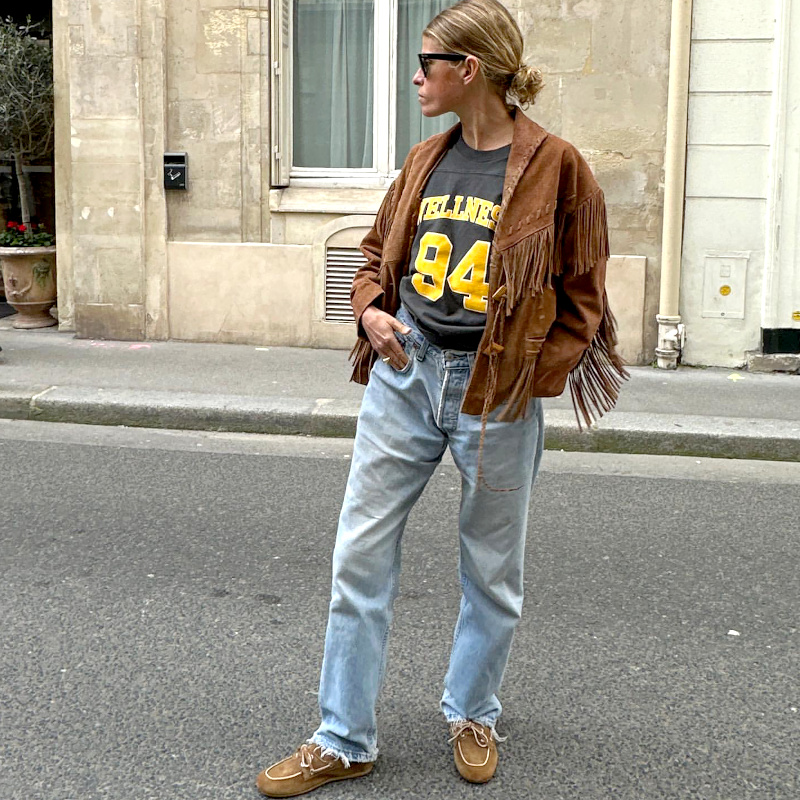
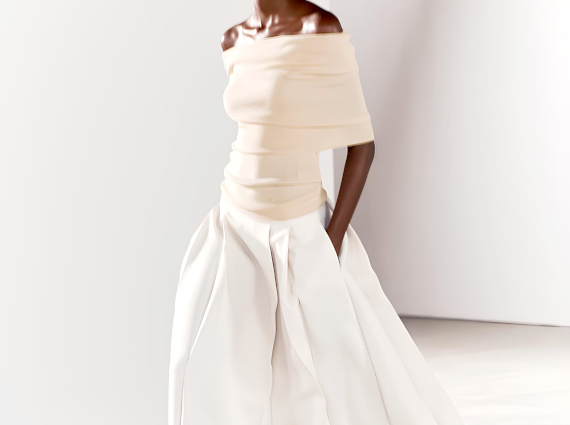
Instead of diving into the house's heritage, Henry preferred to take his inspiration from the label's perfumes and their ultra fresh scents. His first collection was based on mini lengths and little volumes inspired by the girls in films by Blier and Chabrol.
He also voluntarily overlooked other strong points of the label, e.g. the green stripe that he considered outdated.

Between their chosen marketing position - prêt-a-porter with production based in Eastern Europe - and a designer entirely devoted to bringing irreproachable style to the rebirth of the label, Carven has been making its way since last summer. Today, it offers young women a style worthy of the name at prices that are compatible with their budgets.
Like Carmen Tommaso before him, Guillaume Henry has succeeded in conceiving a wardrobe that fits today's modern active woman - a resurrection welcomed by the entire profession, from the buyers to the fashion editors. The next step? The opening of the "first" Carven boutique in January, and the first fashion show for the next Parisian fashion week.
Official site: http://www.carven.fr/